
 Türkçe
 English
 العربية

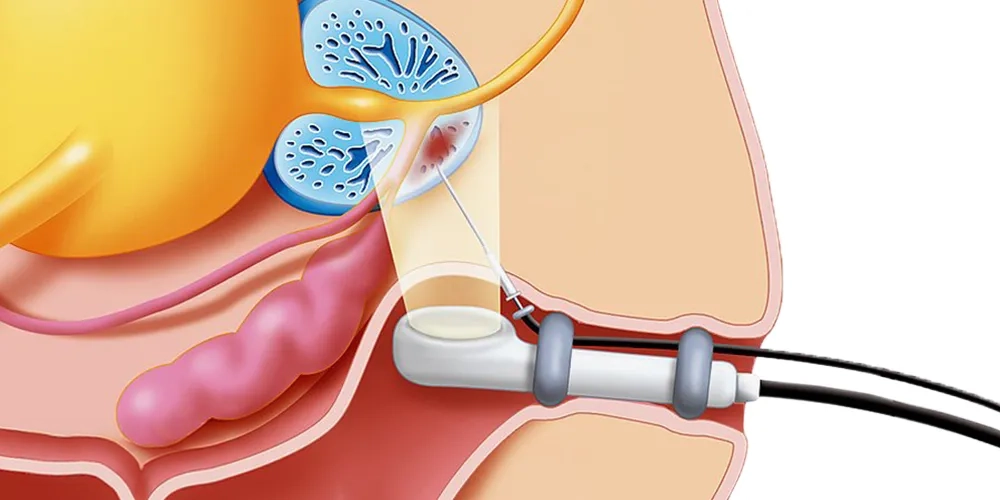
Fusion Prostate Biopsy: Precision and Accuracy in Prostate Cancer Diagnosis
Prostate cancer is one of the most common types of cancer in men, and early diagnosis plays a critical role in the success of treatment. While traditional biopsy methods can sometimes be insufficient, Fusion Prostate Biopsy technology takes the precision and accuracy in this field to a new level. So, what is Fusion Prostate Biopsy and why should it be preferred?
What is Fusion Prostate Biopsy?
Fusion Prostate Biopsy is an advanced biopsy method that combines magnetic resonance imaging (MRI) and ultrasound. This technique allows for more precise identification of suspicious areas in the prostate tissue and enables direct targeting of these areas.
MRI images detect areas in the prostate tissue that show abnormal appearances, while ultrasound provides real-time guidance, ensuring the biopsy needle accurately reaches the target. The combination of these two imaging technologies significantly enhances the effectiveness of the biopsy procedure.
Advantages of Fusion Prostate Biopsy
- Precise Targeting
Fusion technology allows for clear visualization of suspicious tissues, reducing the risk of false-negative results. This is a significant advantage, especially in detecting small or hard-to-identify lesions. - More Accuracy with Fewer Samples
In traditional biopsies, more samples may be needed to locate the suspicious tissue. Fusion biopsy, being directly targeted, achieves accurate results with fewer samples. - Patient Comfort
A less invasive method, Fusion Prostate Biopsy shortens the procedure time and provides a more comfortable experience for the patient. - Early Diagnosis for More Effective Treatment
The high accuracy rate allows for the detection of cancers in their early stages, increasing treatment options and improving the patient’s chances of recovery.
In which situations is Fusion Prostate Biopsy recommended?
Fusion Prostate Biopsy is particularly recommended in the following situations:
- High PSA (Prostate-Specific Antigen) levels
- Previous biopsies failing to detect cancer, but with ongoing suspicion
- Patients at risk of prostate cancer due to family history or genetic predisposition
- Detection of suspicious areas in MRI imaging
How is Fusion Prostate Biopsy performed?
Fusion biopsy is typically performed with the following steps:
- MRI and Ultrasound Imaging
First, detailed images of the prostate tissue are taken, and suspicious areas are marked. - Image Fusion
MRI and ultrasound images are fused to create real-time guidance. - Targeted Sampling
Guided by the images, the biopsy needle is directed to the suspicious areas, and samples are taken. - Evaluation of Results
The collected samples are sent for pathological examination, and a definitive diagnosis is made.
Stay Safe with Centermed
At Centermed, we maximize precision and accuracy in prostate cancer diagnosis with Fusion Prostate Biopsy technology. With our infrastructure equipped with the latest technologies and our expert team, we provide a fast and reliable experience for our patients during the diagnostic process.
Do not overlook the risk of prostate cancer. You can benefit from our Fusion Prostate Biopsy service with the assurance of Centermed for early diagnosis. Your health is our priority!
Schedule an appointment today and take the right step for your health.